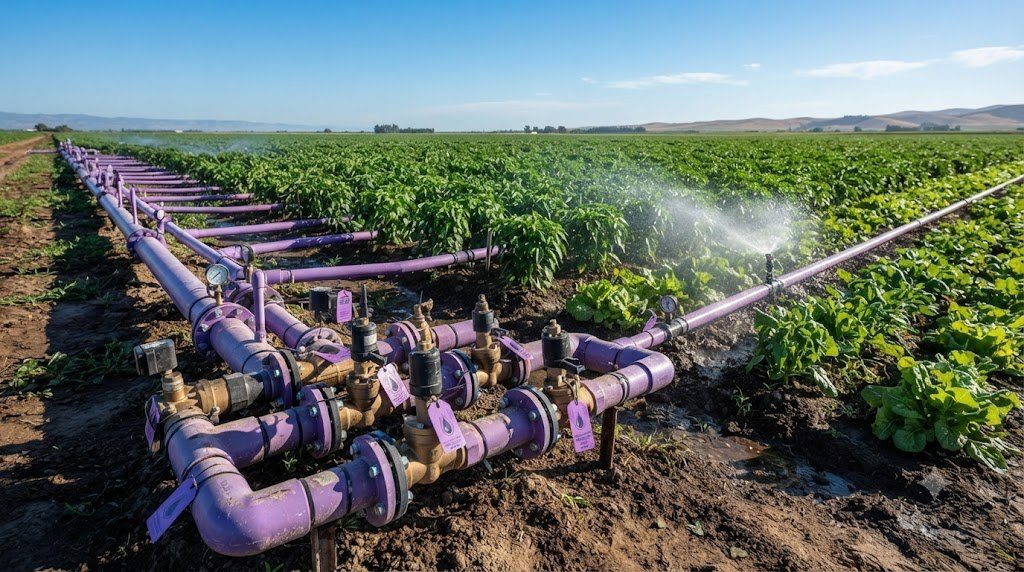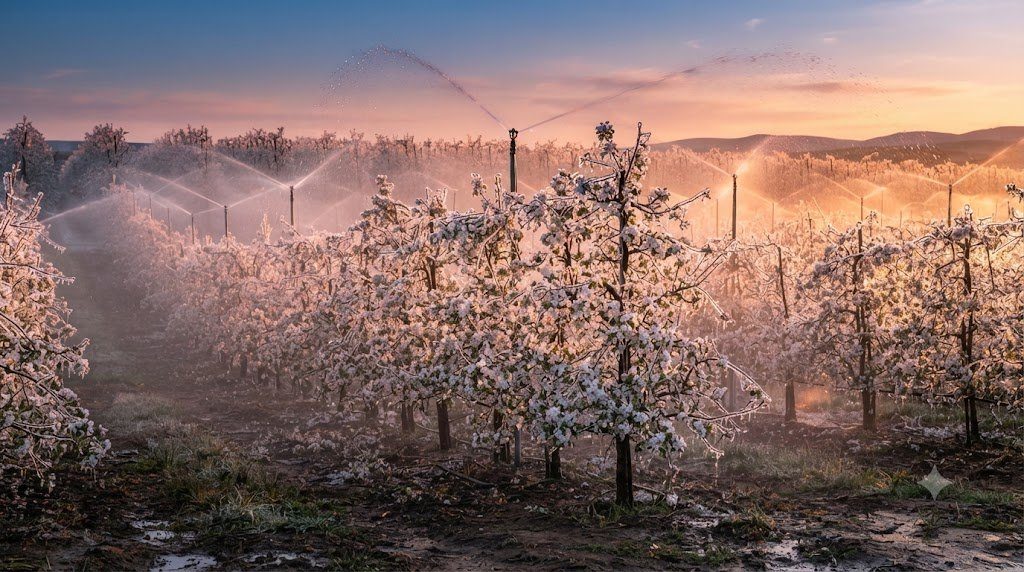
Spring frost events represent one of the most devastating meteorological hazards in commercial fruit, nut, and viticulture production, capable of destroying an entire year of crop revenue in a single sub-zero nocturnal inversion. While conventional active frost mitigation methods such as diesel-powered wind machines and orchard smudge pots consume enormous fuel volumes and generate severe emissions, overhead sprinkler frost protection leverages a fundamental physical phenomenon: the thermodynamic release of latent heat of fusion. When continuous liquid water is applied to freezing plant tissue, the freezing process releases heat directly to the crop buds, preventing critical floral structures from dropping below lethal freezing thresholds.
However, operating an overhead frost protection sprinkler system is an exacting engineering endeavor that carries extreme risks. If an overhead system is operated with insufficient water application rates, or if pumping is prematurely halted while ice is still thawing, evaporative cooling will accelerate, dropping plant tissue temperatures below ambient air levels and destroying the crop far faster than if no water had been applied at all. Designing and operating an over-canopy frost system requires an absolute mastery of thermodynamics, psychrometry, nozzle mechanics, and continuous electrical reliability.
The Latent Heat Thermodynamic Law
As one gram of liquid water transitions to solid ice at 0°C (32°F), it releases exactly 80 calories (334 Joules) of thermal energy—the latent heat of fusion. Conversely, if one gram of water evaporates, it absorbs approximately 600 calories of thermal energy from surrounding tissue. Therefore, growers must apply sufficient continuous water to ensure that freezing thermal release always vastly exceeds evaporative thermal loss.
The Physics of Frost Protection: Radiation vs Advection Frosts
Agricultural meteorologists categorize freezing events into two distinct thermodynamic regimes, each imposing radically different operational constraints on overhead sprinkler systems:
1. Radiation Frosts (Ideal for Sprinkler Protection)
Radiation frosts occur on calm, clear nights with wind speeds below 5 km/h. As the sun sets, the earth’s surface radiates long-wave infrared energy into the cloudless atmosphere, causing surface ground temperatures to drop rapidly. This creates a thermal inversion layer where air near the ground is colder than air 15 to 30 meters above. Overhead sprinkler frost protection achieves exceptional success during radiation frosts because low wind speeds minimize evaporative cooling losses, allowing the continuous release of latent heat to encase buds in protective clear ice while maintaining internal floral temperatures at precisely 0°C.
2. Advective Freezes (Extreme Operational Hazard)
Advective freezes occur when large continental arctic air masses sweep across agricultural regions accompanied by moderate to high wind speeds (exceeding 10 to 15 km/h) and low relative humidity. In advective freezes, there is no thermal inversion layer. Strong, dry winds strip away the thermal boundary layer around plant tissues, driving extreme rates of evaporative sublimation. Applying overhead sprinklers during a severe advective freeze can cause catastrophic freeze damage because the cooling effect of wind-driven evaporation far exceeds the latent heat generated by freezing water.
Calculating Application Rates Based on Temperature and Wind Speed
The minimum required water application rate (precipitation rate in mm/hour) increases with declining ambient air temperature and rising wind velocity. Agricultural engineers calculate minimum application rates using Perry’s empirical equations:
R_frost = f(T_air, T_dewpoint, V_wind, Crop_Stage)
Standard Design Application Rates (mm/hr):
• Calm air (0 – 2 km/h) @ -2.0°C: 2.5 to 3.0 mm/hr
• Moderate breeze (4 – 8 km/h) @ -4.0°C: 4.5 to 5.5 mm/hr
• Strong wind (10 – 15 km/h) @ -6.0°C: 7.0 to 9.0 mm/hr
To protect a 20-hectare almond or apple orchard against a -4.0°C radiation frost with light winds, the system must apply a minimum of 4.0 mm/hr uniformly across the entire canopy. Sizing the pumping headworks for this demand requires a massive continuous flow capacity: 20 hectares × 40 m³/hr per hectare = 800 m³/hr (approximately 222 L/s). Unlike standard irrigation where field zones can be cycled sequentially, frost protection requires 100% of the orchard to be watered simultaneously throughout the entire night.
Nozzle Selection and Mechanical Rotation Speed Criteria
Sprinkler mechanics during freezing weather require specialized design features. Standard irrigation sprinklers will quickly fail when ice accumulates on external drive springs and oscillating arms:
1. High-Speed Rotational Frequency (< 30 to 45 Seconds per Revolution)
The interval between consecutive water wetting pulses over an individual plant bud must never exceed 30 to 45 seconds. If an impact sprinkler rotates too slowly (taking 60 to 90 seconds to complete a revolution), the thin water film deposited on the bud will freeze completely, and evaporative cooling will drop the bud temperature below critical lethality before the next water pulse arrives. High-speed frost sprinklers feature dual-drive arms or specialized lightweight counterweights engineered to rotate in under 30 seconds.
2. Anti-Freeze Spring Hoods and Silicone Boots
In sub-zero temperatures, splashing water droplets freeze onto the sprinkler’s metallic fulcrum pin and torsional spring, locking the oscillating arm in place. Dedicated frost sprinklers enclose the drive spring within a sealed protective silicone boot or brass hood, preventing splashing droplets from freezing on moving components.
Critical Operational Start/Stop Rule
Never wait until the air temperature drops below 0°C to start the pumps. If relative humidity is low, start the system when wet-bulb temperature is at +1.0°C. Once started, NEVER turn the system off until morning sunlight has melted the ice and liquid water is running freely off the trees.
Structural Ice Loading and Canopy Pruning Architecture
While ice protects buds through latent heat release, the physical weight of accumulated ice poses extreme structural hazards. Water applied at 4.0 mm/hr deposits 40 metric tons of ice per hectare every hour. Over a 10-hour nocturnal freeze, an orchard may accumulate 400 tons of ice per hectare, capable of snapping heavy scaffold limbs and splitting tree crotches:
- Trellis and Training Systems: Commercial vineyards and high-density apple orchards using overhead frost systems must invest in heavy-duty structural steel trellising and high-tensile wire support to withstand ice loads.
- Central Leader Pruning: Pruning architecture must emphasize upright, strong branch angles (45 to 60 degrees) rather than horizontal limbs that lack mechanical strength under downward ice loading.
- Targeted Micro-Sprinklers vs Overhead: In orchards with brittle branch structures (such as stone fruit), growers often utilize under-canopy micro-sprinklers. While under-canopy systems provide 1.0 to 2.0°C less thermal protection than over-canopy systems, they eliminate ice loading on tree limbs entirely while warming the orchard floor.
Pumping Redundancy, Auxiliary Power, and System Monitoring
A mechanical breakdown during an active frost protection event results in immediate, total crop destruction. Electrical power grids frequently suffer outages during severe winter storms. Commercial frost systems require comprehensive engineering redundancy:
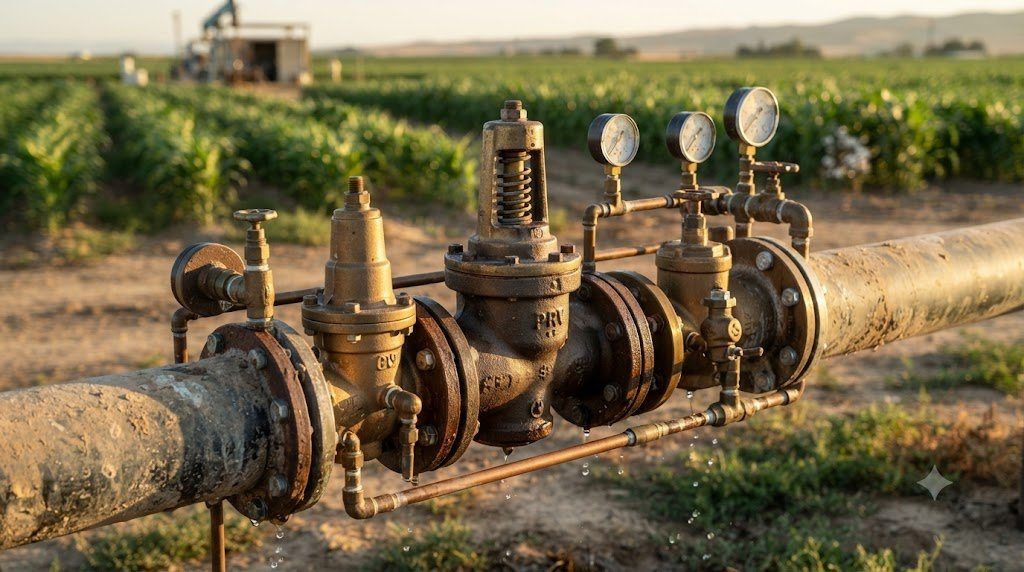
- Dedicated Diesel Auxiliary Pumps: Primary pumping stations must incorporate diesel-engine backup pumps equipped with automatic transfer switches that fire up within 15 seconds of utility grid power loss.
- Dual Intake Manifolds and Screen Scrubbers: Intake sumps must feature heated or deep-submerged intake screens to prevent floating frazil ice from blocking pump suction ports.
- Automated Telemetry and Wet-Bulb Sensors: High-precision electronic temperature and wet-bulb psychrometers placed at crop canopy height automatically alert orchard managers via cellular alarms when threshold temperatures are approached.
Frequently Asked Questions on Frost Protection Sprinklers
Q: Why does ice on the trees appear clear on some nights and cloudy white on other nights?
Clear, transparent ice indicates that water is freezing slowly and continuously from an active liquid film, proving that latent heat is actively being released to protect the buds. Cloudy, milky white ice contains trapped air bubbles, indicating that water was applied too slowly, freezing instantly and exposing buds to evaporative cooling damage.
Q: What is the wet-bulb temperature, and why is it more important than dry-bulb temperature?
Dry-bulb temperature measures ambient air temperature. Wet-bulb temperature reflects the lowest temperature achievable by evaporative cooling at the current relative humidity. When sprinklers first start, water evaporating into dry air instantly drops plant tissue temperatures down to the wet-bulb temperature. Therefore, the decision to start frost pumps must always be based on wet-bulb temperature.
Q: Can overhead sprinklers be used to protect crops against summer heat stress?
Yes, overhead sprinklers can be operated in summer for evaporative cooling. Short, intermittent pulses (1 to 2 minutes every 15 minutes) during extreme heat waves (> 38°C) drop canopy temperatures by 5 to 8°C, preventing sunburn on apples and reducing respiration stress in vineyards.
Q: What happens if a frost protection system runs out of water at 4:00 AM while temperatures are still -3°C?
If pumping stops while sub-zero temperatures persist, dry ambient air will immediately begin evaporating the wet ice glaze. Because evaporation consumes 600 calories per gram while freezing only releases 80 calories, the buds will suffer catastrophic evaporative freeze shock, causing severe mortality within 20 minutes.
Q: How much water storage is required for a commercial frost protection reservoir?
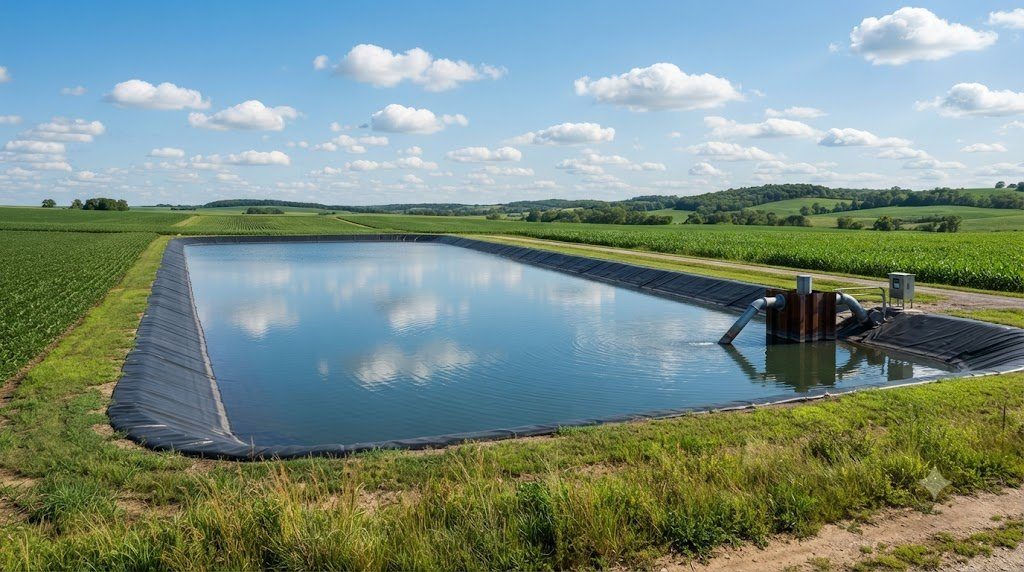
A standard frost system requires sufficient water to operate continuously for two to three consecutive 10-hour nights without recharging. At an application rate of 4.0 mm/hr across 10 hectares, total storage required equals 400 m³ per hour × 10 hours = 4,000 m³ (approximately 4 million liters or 3.2 acre-feet) per night.
Q: Why are under-canopy micro-sprinklers safer for mature stone fruit orchards?
Mature stone fruit trees (peaches, plums, apricots) have brittle wood that easily splits under heavy ice loads. Under-canopy micro-sprinklers apply warm groundwater (typically 12 to 15°C) directly to the orchard floor, creating a warm vapor layer that rises through the canopy, providing 1.5 to 2.5°C of protection without depositing weight on tree limbs.
Psychrometric Dewpoint Charts and Critical Temperature Baselines
The timing of system startup during a freeze event is governed by psychrometric wet-bulb equilibrium. The table below outlines the critical temperature thresholds and mandatory startup guidelines based on ambient relative humidity and bud phenology:
Following a freeze event, post-thaw nutritional support is essential. Applying dilute foliar sprays of seaweed extract (kelp), potassium phosphite, and zinc stimulates endogenous cytokinin production, helping damaged vascular tissues repair xylem flow and minimizing post-freeze blossom drop.
Furthermore, agricultural insurance policies frequently require documented telemetry logs verifying continuous operational pressure and wet-bulb temperatures throughout the frost event. Integrating automated data loggers that record line pressure at 60-second intervals provides certified proof of uninterrupted mechanical protection, facilitating rapid insurance claims in the event of partial regional frost losses.