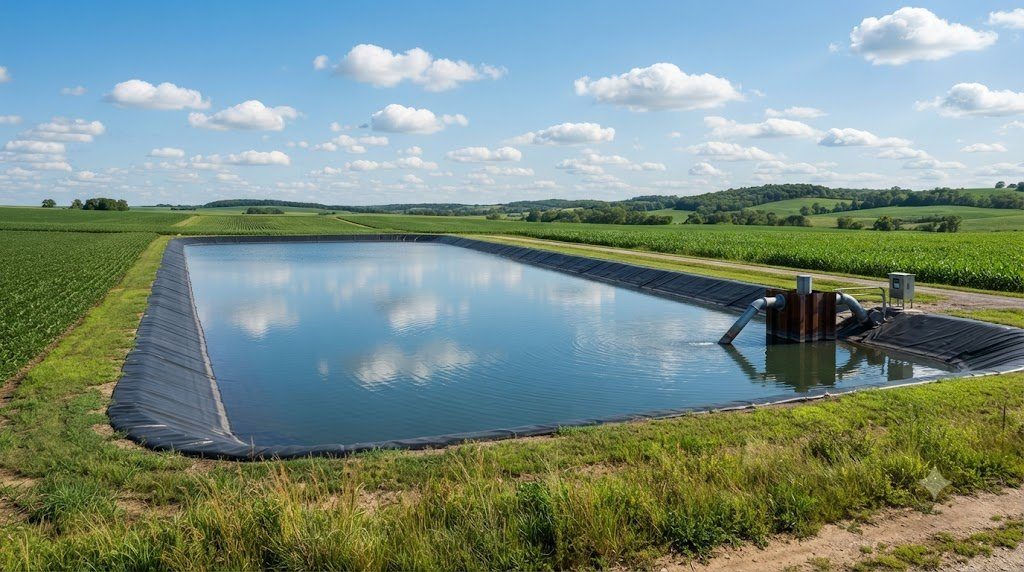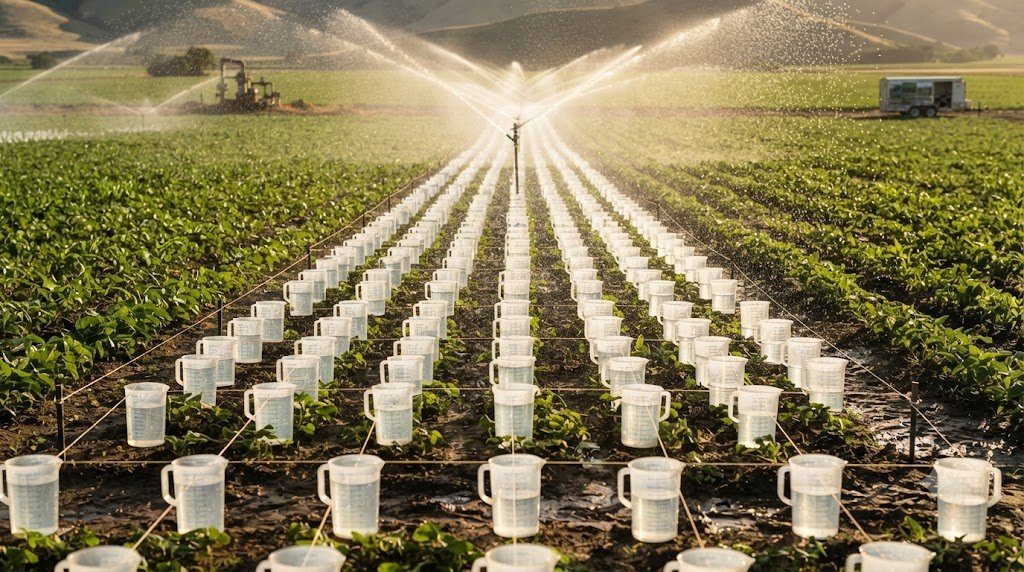
The utilization of reclaimed municipal wastewater and on-farm recycled process water represents one of the most reliable, climate-resilient water supplies available to modern agricultural production. Unlike conventional rainfall and snowpack runoff that vary drastically from year to year, municipal wastewater flows continuously regardless of meteorological drought, delivering a predictable daily volume throughout the growing season. Furthermore, treated effluent naturally contains valuable plant-available nutrients—including inorganic nitrate nitrogen (NO3–), orthophosphates, and potassium—enabling commercial producers to significantly reduce commercial synthetic fertilizer purchases.
However, agricultural irrigation with recycled water introduces profound chemical, agronomic, and microbiological hazards that require sophisticated technical management. Municipal wastewater concentrates dissolved mineral salts from industrial and household use, frequently exhibiting elevated Sodium Adsorption Ratios (SAR), excessive chloride concentrations, and high boron levels that can induce severe leaf toxicity and soil dispersion. Furthermore, ensuring food safety compliance under strict global standards (such as the US FDA Food Safety Modernization Act and WHO Guidelines) demands rigorous pathogen barrier management, tertiary filtration, disinfection monitoring, and specialized subsurface irrigation delivery. This comprehensive engineering guide examines wastewater quality parameters, soil salinity leaching calculations, filtration protocols, and food safety standards for recycled water irrigation.
The Multiple-Barrier Food Safety Principle
Under modern agricultural food safety standards, recycled wastewater must pass through a strict ‘Multiple-Barrier’ safety chain: biological secondary treatment, coagulated tertiary filtration, pathogen disinfection (UV or chlorination), and physical root-zone application via Subsurface Drip Irrigation (SDI). By applying water beneath the soil surface, reclaimed water never contacts above-ground edible foliage or fruit, eliminating microbial cross-contamination risks entirely.
Wastewater Classification and Agronomic Water Quality Standards
Reclaimed water is categorized based on its degree of municipal treatment, which dictates permitted agricultural cropping uses:
1. Secondary Treated Effluent (Restricted Agriculture)
Secondary treatment utilizes biological aeration tanks and secondary clarifiers to remove settleable organic solids, reducing Biochemical Oxygen Demand (BOD5) and Total Suspended Solids (TSS) below 30 mg/L. Secondary effluent is legally restricted to non-food crops, including industrial fiber cotton, animal pasture forage, commercial turf sod farms, and biomass forestry plantations.
2. Tertiary Disinfected Effluent (Unrestricted Agriculture)
Tertiary treatment adds deep-bed sand filtration or micro-filtration membranes, followed by high-dose chlorination or ultraviolet (UV) radiation. Tertiary water achieves TSS < 2 mg/L, turbidity < 2 NTU, and non-detectable fecal coliforms (< 2.2 MPN / 100 mL). Tertiary disinfected water is legally certified for unrestricted irrigation across all commercial food crops, including processing tomatoes, wine grapes, almonds, citrus, and raw-consumed vegetables.
Soil Chemistry: Managing Sodium Adsorption Ratio (SAR) and Soil Dispersion
The most insidious long-term threat associated with recycled water irrigation is soil sodicity. Reclaimed water contains elevated sodium (Na+) concentrations relative to beneficial divalent cations calcium (Ca2+) and magnesium (Mg2+). The chemical balance is quantified by the Sodium Adsorption Ratio (SAR):
Where ion concentrations are measured in milliequivalents per liter (meq/L).
When water with a high SAR and low-to-moderate electrical conductivity infiltrates soil, sodium ions displace calcium ions on clay exchange sites. This causes clay platelets to repel each other and disperse (slaking). Soil aggregates collapse, sealing surface pores and transforming structured loam into an impermeable, cement-like crust with near-zero hydraulic infiltration capacity. Water ponds on the surface, starving roots of oxygen.
Gypsum (Calcium Sulfate) Soil Remediation Protocols
To counteract sodium dispersion, farm managers continuously inject agricultural gypsum (CaSO4·2H2O) into the irrigation stream or broadcast fine gypsum over the field (2 to 5 tons per hectare annually). Dissolved calcium ions actively displace sodium from clay exchange complexes, forming soluble sodium sulfate (Na2SO4) that is easily washed downward below the root zone, preserving open soil macro-pores and maintaining healthy infiltration rates.
Calculating the Leaching Fraction (LF) for Salinity Control
Because recycled water continually introduces dissolved mineral salts into the root zone, soil salinity will steadily climb until it reaches toxic levels unless a portion of the applied water is dedicated to leaching salts past the root zone. The required Leaching Fraction (LF) is calculated using the Rhodes equation:
LF = EC_w / [ (5 × EC_e_threshold) – EC_w ]
Total_Water_Application = Crop_ET_c / ( 1 – LF )
Where ECw is the electrical conductivity of the reclaimed irrigation water, and ECe_threshold is the crop’s maximum soil salinity tolerance threshold (e.g., 1.5 dS/m for almonds, 3.0 dS/m for olives, 7.0 dS/m for cotton). If reclaimed water ECw is 1.8 dS/m and the crop threshold is 2.5 dS/m: LF = 1.8 / [ (5 × 2.5) – 1.8 ] = 1.8 / 10.7 = 0.168 (approximately 17%). The grower must apply an additional 17% water volume beyond crop ET to flush accumulated salts below the active root zone.
The Nitrogen Credit Accounting Mandate
Reclaimed wastewater typically contains 20 to 40 kg of total nitrogen per 1,000 m³ of water. Over a full irrigation season applying 6,000 m³/ha, the water delivers 120 to 240 kg/ha of pure nitrogen! Growers must subtract this water-delivered nitrogen from their commercial fertilizer budget. Failure to account for nitrogen credits causes excessive vegetative growth, delayed fruit maturity, and severe nitrate groundwater contamination.
Filtration and Biofilm Mitigation in Recycled Water Networks
Reclaimed effluent contains elevated levels of dissolved organic carbon and residual phosphorus, creating an ideal incubation broth for bacterial biofilms inside distribution pipelines. Bacteria attach to pipe walls, secreting extracellular polymeric substances (EPS) that trap fine silt, forming thick gelatinous mats that rapidly occlude drip emitter labyrinths:
- Automatic Depth Disc and Media Filtration: Surface screen filters fail rapidly on recycled water due to flexible biological flocs squirming through mesh openings. Specifying automatic self-cleaning grooved disc filters or sand media batteries rated at 130 microns (120 mesh) provides 3-dimensional depth filtration that traps organic floc.
- Continuous Chlorine Residual Maintenance: Inject sodium hypochlorite continuously to maintain a free chlorine residual of 1.5 to 2.5 ppm (mg/L) at the most distant lateral flush valve. Chlorine oxidizes bacterial slime and keeps emitter labyrinths sterile.
- Periodic Peroxide Shock Treatment: Inject hydrogen peroxide (50 to 100 ppm) or peracetic acid twice per season. Peroxide penetrates and strips mature organic biofilms that develop resistance to basic chlorination.
Frequently Asked Questions on Recycled Water Irrigation
Q: Is it safe to eat raw fruits and vegetables irrigated with tertiary treated wastewater?
Yes, when tertiary treated water is applied via Subsurface Drip Irrigation (SDI) or directed furrow irrigation, food safety regulations (including the US FDA FSMA and California Title 22) certify it for raw-consumed human produce. Subsurface application ensures that treated water never contacts edible plant tissue, eliminating microbiological food safety risks.
Q: Why must purple pipe and purple valve boxes be used for recycled water systems?
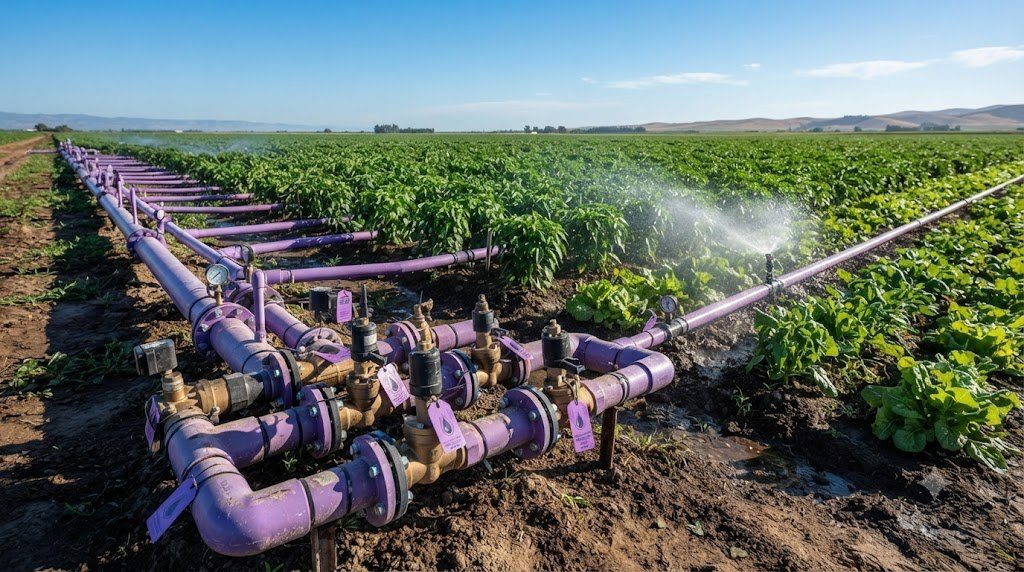
Plumbing and environmental safety codes legally mandate that all pipes, valve boxes, control valves, and quick-coupling lids carrying reclaimed water be color-coded in Pantone Purple (Purple 512). This universal visual warning prevents cross-connection with potable drinking water grids.
Q: How does boron toxicity manifest in crops irrigated with reclaimed municipal water?
Boron is added to municipal water via household laundry detergents. When boron exceeds 1.0 to 1.5 mg/L, sensitive crops (such as almonds, peaches, and citrus) accumulate boron at leaf tips, causing yellow chlorosis, brown necrotic margins, and premature defoliation. Blending with low-boron rainwater mitigates toxicity.
Q: Can reverse osmosis (RO) be used on farms to purify reclaimed wastewater?
While reverse osmosis removes 99% of dissolved salts, its high capital cost ($1.50 to $3.00 per cubic meter) and massive brine discharge disposal liabilities make it economically impractical for broadacre agriculture, though it is increasingly utilized in high-density commercial hydroponic greenhouses.
Q: What is the difference between greywater and blackwater?
Greywater is untreated wastewater from household washing machines, showers, and bathroom sinks (excluding toilets and kitchen dishwashers). Blackwater is wastewater containing human fecal waste from toilets. Untreated greywater can be used on-farm for landscape trees and woody ornamentals via subsurface mulch basins, but never on edible root crops.
Q: How often should soil salinity testing be performed on recycled water blocks?
Perform complete soil chemical analysis (ECe, SAR, Boron, Chloride, and Exchangeable Sodium Percentage) at least twice per year: once in early spring prior to active irrigation, and once in late autumn following the conclusion of the irrigation season, to evaluate seasonal salt accumulation and plan winter leaching flushes.
Microbial Inactivation Kinetics: UV Transmittance and Free Chlorine Contact Time
Disinfecting treated wastewater to eliminate pathogenic human viruses, bacteria (such as Salmonella and E. coli O157:H7), and parasitic protozoan cysts (such as Cryptosporidium and Giardia) is governed by strict disinfection kinetics:
1. The Chlorine ‘CT’ Inactivation Standard
Chemical disinfection efficacy is quantified by the product of free chlorine concentration (C in mg/L) and effective hydraulic contact time (T in minutes): CT = C × T. Under agricultural wastewater regulations, tertiary water requires a minimum CT value of 450 mg·min/L, with a minimum modal contact time of 90 minutes. A serpentine baffled contact chlorine basin forces wastewater through a labyrinth channel, ensuring no fluid short-circuiting occurs and guaranteeing that every pathogen receives the lethal chemical exposure required for safe agricultural distribution.
2. Ultraviolet (UV) Radiation and Fluid Transmittance (UVT)
For high-value organic agriculture where chemical chlorination is restricted, ultraviolet disinfection channels deploy arrays of low-pressure high-output (LPHO) mercury vapor lamps emitting germicidal UV-C light at 254 nanometers. UV radiation disrupts microbial DNA and RNA bonds, rendering pathogens incapable of replication. Sizing a UV system requires measuring water UV Transmittance (UVT %); recycled water must maintain a UVT above 65% to allow germicidal light to penetrate the fluid stream effectively without being blocked by dissolved humic compounds.
Long-Term Heavy Metal and Trace Contaminant Monitoring Protocols
Commercial agricultural properties utilizing municipal reclaimed effluent must establish an ongoing toxicological monitoring framework to prevent long-term soil accumulation of heavy metals and emerging chemical contaminants:
- Heavy Metal Soil Accumulation Limits: Annually analyze soil core samples (0 to 30 cm and 30 to 60 cm depths) for cumulative concentrations of cadmium (Cd), lead (Pb), arsenic (As), and copper (Cu). Ensure concentrations remain well below EPA 40 CFR Part 503 ceiling limits to preserve soil agricultural productivity.
- Per- and Polyfluoroalkyl Substances (PFAS): Monitor emerging industrial ‘forever chemicals’ in municipal effluent. Selecting deep well blending strategies or granular activated carbon (GAC) polish filtration helps mitigate trace organic compound bioaccumulation in edible produce.
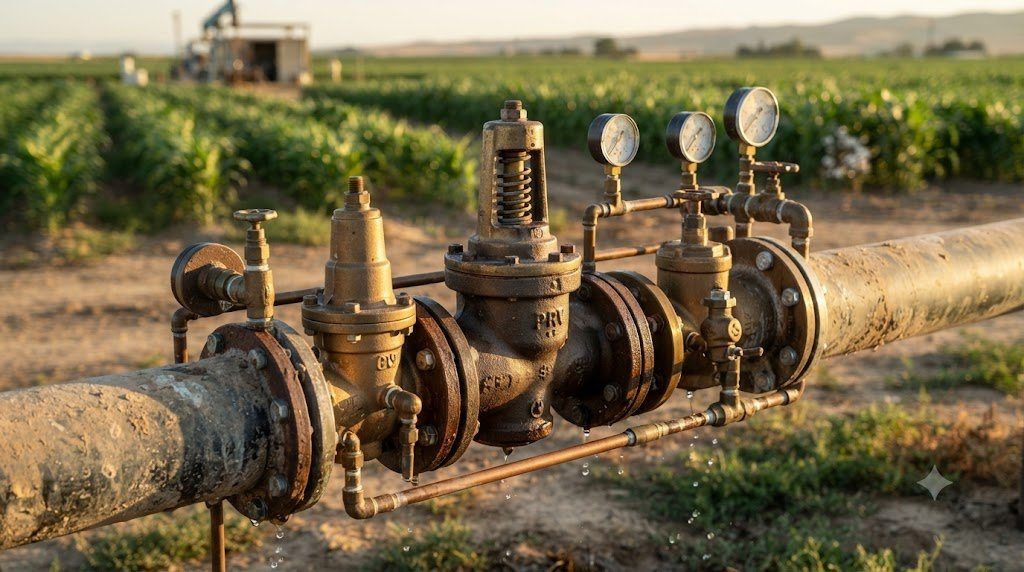
- Backflow Prevention Testing: Plumbing codes legally mandate that all connections between recycled water networks and potable farm piping feature certified Reduced Pressure Zone (RPZ) backflow preventers tested annually by certified inspectors.
Additionally, farm personnel handling recycled water irrigation infrastructure must undergo standardized occupational health and safety training. Installing eye-wash stations, providing personal protective equipment (PPE) during filter maintenance, and maintaining clear signage across all purple-coded valve boxes ensures full compliance with agricultural health and safety regulations while safeguarding farm labor.